
Outcry Over Belgian Columnist's Violent Rhetoric Targets Jews
Art & Terror's Weekly Newsletter - Your comprehensive review of the week's events at the intersection of arts and politics.

This week’s Art & Terror round-up focuses on the explosive controversy surrounding Flemish author Herman Brusselmans, whose recent column in the Belgian weekly HUMO ignited outrage across Belgium and beyond. In a piece titled "The Middle East will explode, World War III is imminent," Brusselmans wrote a disturbing line that has since dominated headlines: “I want to shove a sharp knife down the throat of every Jew I meet.” This shocking statement, which he later claimed was a metaphor for his anger over the Israeli-Palestinian conflict, has spurred legal action, intense public criticism, and profound consequences for the literary world.
The 66-year-old Brusselmans, a prolific writer known for his provocative style and media antics, published this inflammatory column in the August 4, 2024, edition of HUMO. With almost two books published annually and a prominent role in Belgian television as a game show judge, Brusselmans has long been a figure of controversy. His recent anti-Semitic comments, however, represent an unprecedented escalation of his rhetoric, leading to denunciations from Jewish and non-Jewish organizations alike.
Legal and Public Backlash
Following the publication of the column, the East Flanders Public Prosecutor's Office launched an official investigation into whether Brusselmans’ comments violated Belgian anti-racism laws. The equal opportunities institute UNIA filed a formal complaint, arguing that Brusselmans’ column breached Article 20 of the anti-racism legislation by inciting hatred and violence against Jews. As of now, no investigative judge has been appointed, but the investigation is ongoing, and both Brusselmans and his legal team have been notified .
Alongside UNIA’s legal challenge, the European Jewish Association (EJA) swiftly condemned the column and announced that it had filed a lawsuit against both HUMO and Brusselmans for incitement to murder. Rabbi Menachem Margolin, president of the EJA, described the column as "psychopathic" and warned that such extreme rhetoric inevitably leads to real-world violence. The EJA is demanding a public apology from HUMO and immediate suspension of the author .
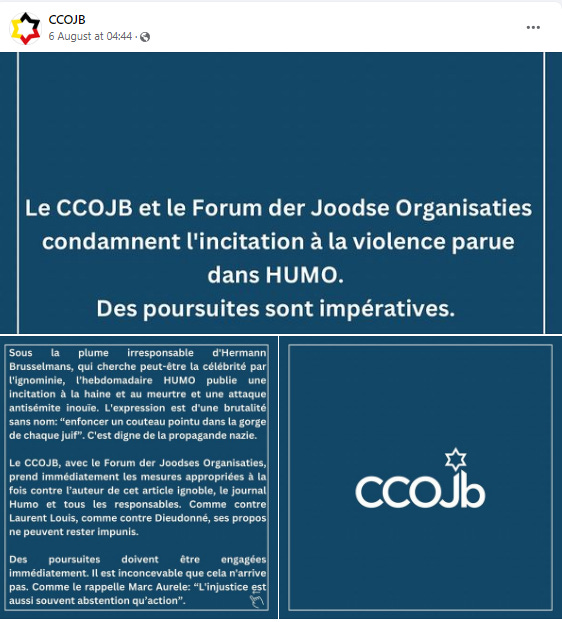
The CCOJB (Coordination Committee of Jewish Organizations in Belgium) and the Forum der Joods Organisaties have also joined the legal push, issuing a press release accusing Brusselmans of seeking infamy through hateful and dangerous rhetoric. They assert that his violent rhetoric towards Jews constitutes not just a violation of journalistic ethics but a clear incitement to harm .
Media and Ethical Debate
The situation has led to heated debates about freedom of expression and the responsibilities of media outlets in handling extremist content. Brusselmans’ defenders, including HUMO's deputy editor-in-chief Matthias Vanderaspoilden, argue that the column should be seen as satirical and not a literal call to violence. Vanderaspoilden emphasized that HUMO provides a platform for diverse opinions and that Brusselmans’ column, albeit provocative, falls within the realm of hyperbolic expression .
Brusselmans himself responded to the criticism by claiming that his comments were metaphorical, intended to convey his deep frustration over the plight of Palestinians. He emphasized that he does not hold a monolithic view of Jewish people and accused his critics of taking his words out of context . However, his subsequent remarks, which compared the Jewish community’s reaction to his column to their ongoing "murder" of Palestinians, only intensified the outrage .
Resignations and Literary Fallout
Amid the uproar, the incident has had serious ramifications within the Belgian literary community. Arnon Grunberg, a renowned Dutch author and long-time HUMO columnist, resigned from the magazine in protest. In a resignation letter published by De Standaard, Grunberg criticized HUMO's handling of the situation and rejected the notion that Brusselmans' column could be classified as satire. He stated that while he supports free speech, he could not continue to publish alongside an author who engages in revisionist and violent rhetoric .
Grunberg’s resignation after 25 years at HUMO sent shockwaves through the Belgian media landscape. He condemned the magazine’s response, accusing them of trivializing dangerous ideas and failing to take responsibility for publishing such inflammatory content. Grunberg also expressed dismay that HUMO did not directly address the SA songs or fascist symbolism that he believes have crept into the publication alongside Brusselmans’ extreme views. In his resignation letter, Grunberg stated that while he defends the right of neo-Nazis to protest, he would never join such a protest himself, drawing a clear line between supporting free speech and condoning violent, hate-filled rhetoric .
Historical Context: Authors and Violent Incitement
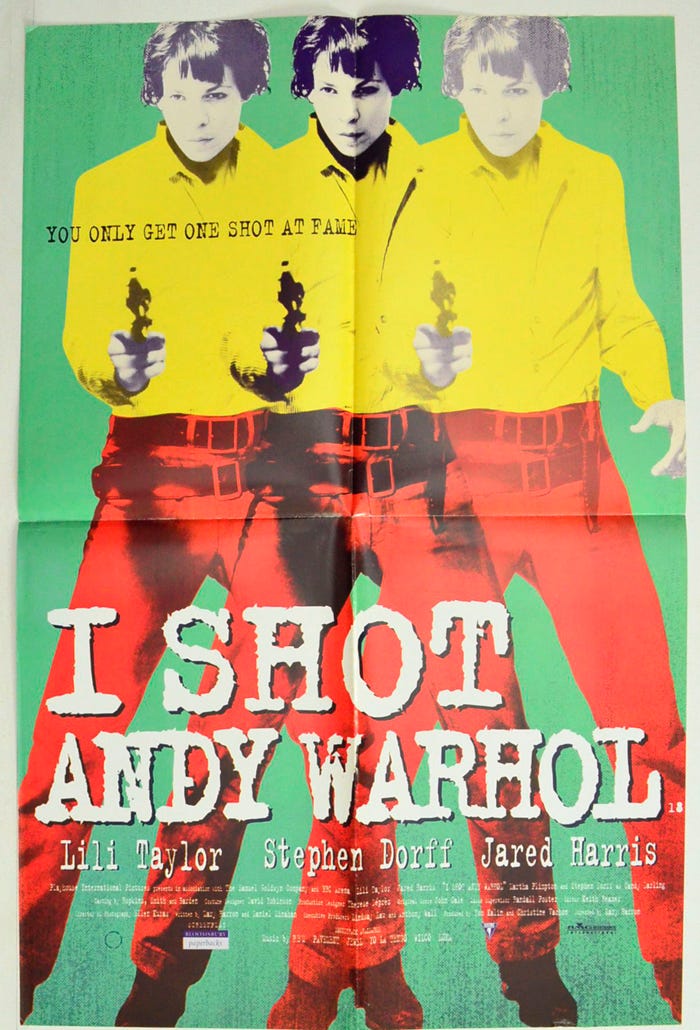
The case of Herman Brusselmans recalls past incidents where authors have used their platforms to promote violent ideologies, sometimes with devastating consequences. For instance, The Turner Diaries, a white nationalist novel written by William Luther Pierce under the pseudonym Andrew Macdonald, has been linked to multiple acts of domestic terrorism in the United States, including the Oklahoma City bombing carried out by Timothy McVeigh. Similarly, Valerie Solanas' SCUM Manifesto, which advocated for the extermination of men, was connected to her attempted murder of artist Andy Warhol in 1968. Another controversial work, The Anarchist Cookbook, became notorious for its detailed instructions on making explosives, and its influence is often cited in connection with violent plots by fringe groups .
These examples demonstrate the potentially lethal consequences of incendiary writings, particularly when such rhetoric taps into societal frustrations or extremist ideologies. Brusselmans' column, while positioned as a satirical reaction to political tensions, has been interpreted by many as crossing the line into dangerous incitement. The backlash he faces echoes these earlier controversies, raising concerns about the media’s role in amplifying extreme views that may incite real-world violence .
Ongoing Investigations and Broader Implications
As the legal proceedings against Brusselmans and HUMO continue, this case has sparked a broader conversation in Belgium and beyond about the limits of satire, the dangers of normalizing hate speech, and the responsibility of both writers and editors in managing public discourse.
Israel’s envoy to Belgium, Idit Rosenzweig-Abu, has pointed out the double standards at play, asking rhetorically how the Belgian media would react if such statements were made about Muslims rather than Jews .
The controversy has also added to the ongoing dialogue about rising anti-Semitism in Europe, with many Jewish leaders warning that such dangerous rhetoric fuels an already hostile environment. According to the European Union’s Fundamental Rights Agency, over 70% of Jews in Belgium report feeling unsafe expressing their Jewish identity publicly. This reality, coupled with the extreme language used by Brusselmans, underscores the seriousness of the situation and the need for vigilance against hate speech in all its forms.
Conclusion
The incident involving Herman Brusselmans and his violent rhetoric toward Jews has reignited debates about the boundaries of free speech, the role of satire, and the responsibilities of media outlets in preventing the normalization of hate speech. With legal investigations underway and continued protests from Jewish organizations, the controversy shows no signs of abating. It remains to be seen how the Belgian courts will handle the case, but what is clear is that this event has shaken the country’s literary and journalistic circles and has placed HUMO at the centre of a critical debate on media ethics.